Lake Texoma Fishing Report May 2017

Lake Texoma Fishing Report May 2017

Lake Texoma May 2017 Fishing Report

The fishing on Lake Texoma has been wonderful this Spring and the Summer bite should be great as well!!

I’ve been catching them from 3 to 35 feet of water either on swimbaits or slabs. Recently the swimbait bite has been best for me for the 15-19 inch Striper as well as the bigger 10-13 lb striper!  Slabs will give you great action with some smaller fish as well!
Striper and Sand Bass are returning from the spawn daily and will be extremely hungry and cruising points, ledges, and chasing bait up onto the flats to fill their bellies. The Sand Bass will pile up on points with deep water access and will be easy to find with your electronics.
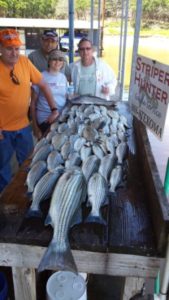
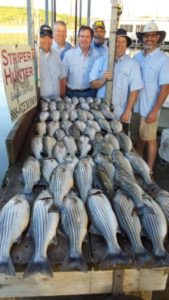
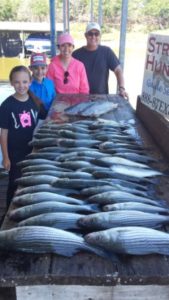
Good limit of Stripers!

You can either drift over these points or anchor up and expect some fast action bouncing slabs off the bottom or reeling them up fast through a thicker school. The striped bass will be cruising deepwater ledges searching for an easy meal. Using your electronics, scan these ledges and locate  a cluster of fish. Stop and drift the ledge and fish using slabs bounced off the bottom or heavy deepwater swim baits slow rolled just above the bottom to catch you some big, hungry, line stripping Striper!
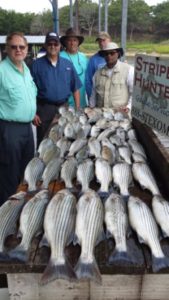
Striper and Sandbass!

As the water continues to warm the schooling size striped bass (box fish fewer than 20 inches) will form large schools and cruise open deepwater chasing bait. A good method for catching these open deepwater fish is using heavy slabs and dropping them down through the school and then reeling them back up as fast as possible through the schools of Striper. We call this “rippin’ slabs”! This technique can be very effective on deepwater schools.
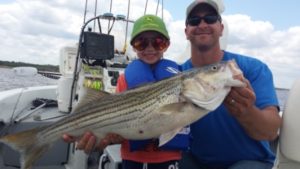
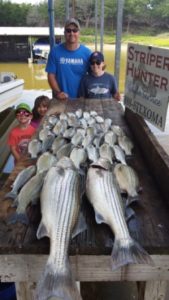
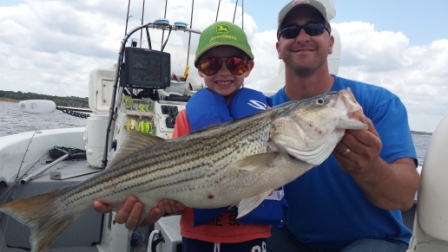
Big fish are roaming around!
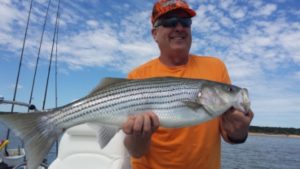
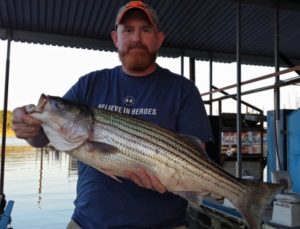
Big Fish!

Sometimes these fish hit so hard while you’re rippin’ it will almost yank the fishing rod right out of your hand! Often times the larger Striper won’t be in these large deepwater schools of box fish; they often like to cruise around in smaller groups or even by themselves, so don’t be afraid to look around away from all the boats and outside the main schools of Striper for some of these bigger fish.
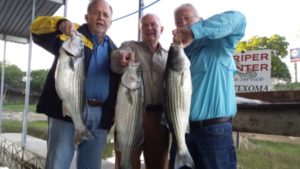


The Sand Bass and Striper will also chase bait from deepwater up onto some of the numerous flats on Lake Texoma. They will chase this bait up into as shallow as 10 feet of water. Watch for schooling fish on the surface, or seagulls diving, or also keep an eye out for the large blue herons hovering over the water. These blue herons are some of the best fish finders on the lake…Don’t ever ignore them!! Always have a good pair of binoculars on board your boat to help you out.

It will be a Super Summer on our great Lake Texoma!  Come on out and rent a cabin, camp out, rent a boat or CALL ME and come on out and enjoy everything Lake Texoma has to offer!

To learn more about me and the way I catch fish, check it out here…

http://www.texomastriperhunter.com/about/


Best of luck and I’ll see y’all out there!

Capt. Stephen Andre’

Striper Hunter Guide Service

www.texomastriperhunter.com

Call or Text 972-816-6000

Toll free 888-8TEXOMA
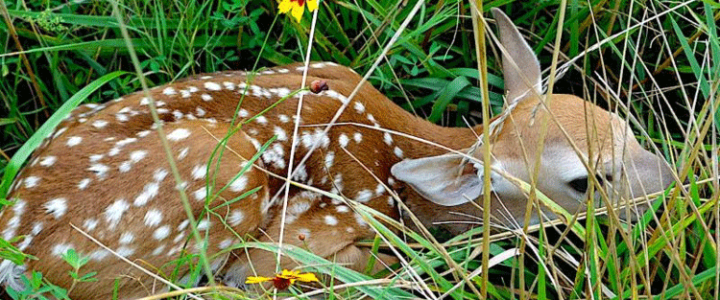


Resist Urge to “Rescue” Young Wildlife

Resist Urge to “Rescue” Young Wildlife

Oklahoma Department of Wildlife Conservation | May 8, 2017

Springtime brings renewal in nature. It’s a time of abundance when new life and new growth emerge, continuing the ancient cycle that defines the outdoor world.  Unfortunately each spring, well-meaning people interrupt nature’s balance because they want to “rescue” newborn and young animals that, at first glance, might appear to be abandoned.

“If you find newborn wildlife while in your yard or in the woods that appears to be alone, chances are an adult animal is nearby and is simply waiting for you to move along so they can take care of their young,” said Melynda Hickman, wildlife diversity biologist for the Oklahoma Department of Wildlife Conservation.

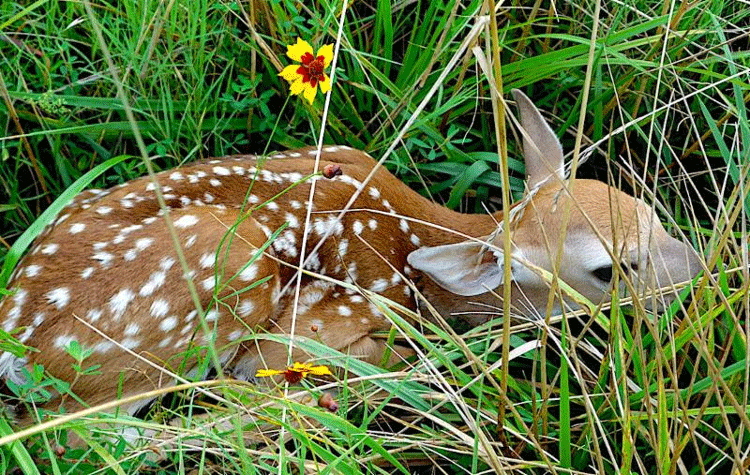
Fawn in tall grass
This spring, many people will walk up on a fawn that appears to be alone. Biologists say it is best to resist the urge to help because adult animals are likely nearby. [MATT JOHNSON / READERS SHOWCASE 2016]
People who happen across a hatchling bird or a young fawn are urged to leave them and move away from the area. “It is common for fawns to remain in a safe place while does feed nearby, and interfering with that always causes more harm than good. It’s also best to leave birds, young squirrels and other wildlife alone as well.”

Biologists say that people trying to help can actually be more stressful on young wildlife than if those people would have simply left them alone.

“The willingness among well-meaning sportsmen and outdoor enthusiasts to want to help is a good thing, but choosing to allow nature to run its course is often the best help we can offer young wildlife,” Hickman said.

Not only is it best to not interfere in nature, it also could be illegal. Many people don’t realize there are laws that protect most wildlife species, and those laws prohibit people from handling or “rescuing” wildlife.

Federal Junior Duck Stamp Exhibit at Hagerman

Federal Junior Duck Stamp Exhibit at Hagerman

The Junior Duck Stamp Art Exhibit is on tour across the country and will be on display at Hagerman National Wildlife Refuge on Lake Texoma from April 30 – May 7, 2017.  In conjunction with this national exhibit, art students from local schools will display works that center on the themes of nature and wildlife.

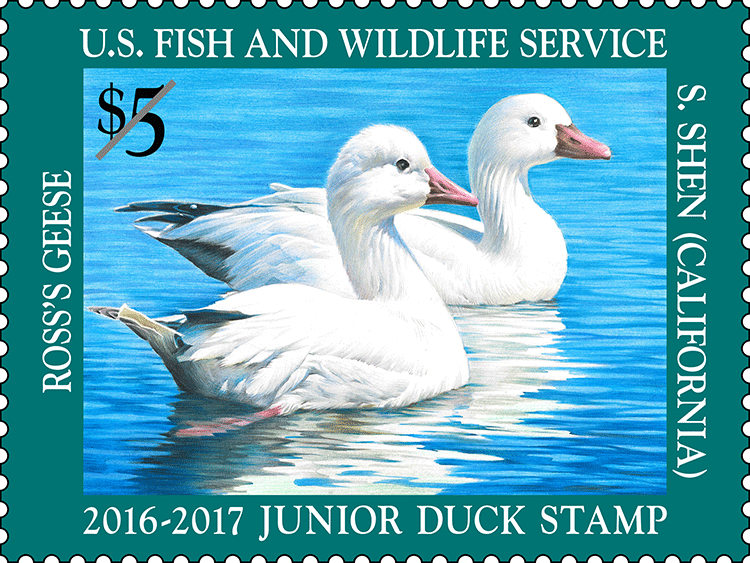
In 2016, over 25,000 students across the United States submitted entries in the federal Junior Duck Stamp Art Contest.  The winning artwork is used as the design for the Junior Duck Stamp.  The revenue from the sale of this stamp funds environmental activities for children through a federal curriculum that combines the arts and sciences to teach environmental conservation.  The program encourages students of all grades to explore the natural world and express and share what they have learned with others.

Federal Junior Duck Stamp Exhibit

A display of the winning artwork tours the country annually, and will be on display in the Texoma area for the first time at the Hagerman Refuge Visitor Center.  The Junior Duck Stamp Program is an offshoot of the Federal Duck Stamp Program.  The purchase of Federal Duck Stamps supports the work of the National Wildlife Refuge system, promoting waterfowl conservation through habitat procurement and protection in places like Hagerman National Wildlife Refuge.

Make plans to see the artwork of local students and the national touring exhibit of Junior Duck Stamp winners.  Refuge Visitor Center hours are Monday – Friday 7:30 am – 4:00 pm. Saturday 9:00 am – 4:00 pm and Sunday 1:00 pm – 5:00 pm.